
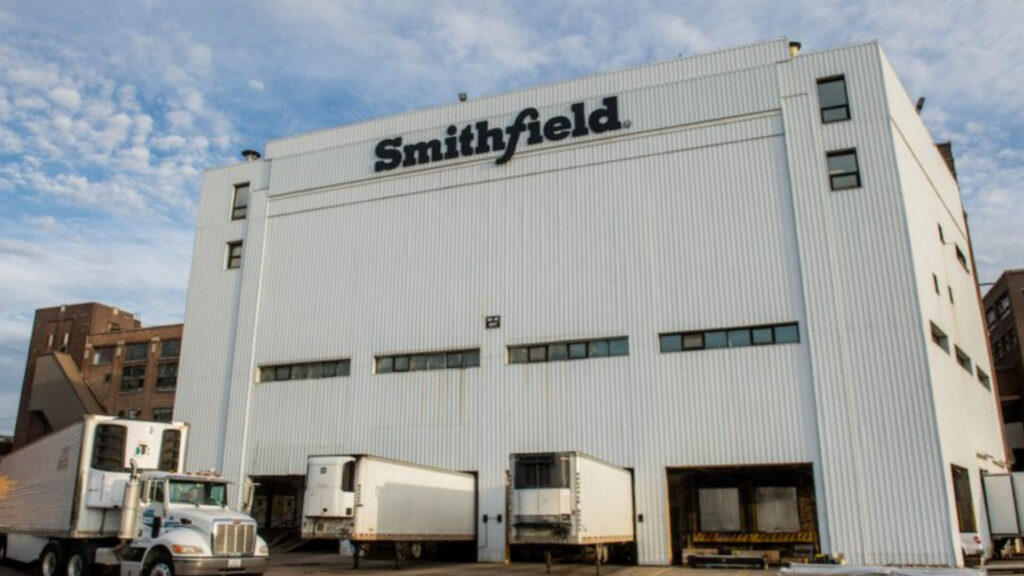
Sioux Falls just got a “big-project” announcement that will reshape the region’s contracting landscape for years.
Smithfield Foods is investing $1.3 billion over the next three years to build a state-of-the-art facility in Foundation Park in northwest Sioux Falls—right at the I-29 and I-90 intersection. The company says the new site will be the most modern of its kind in the U.S., featuring advanced automation technology and IT systems, and totaling more than 1.1 million square feet of production space.
For contractors and vendors, announcements like this aren’t just economic development news—they’re a flashing sign that says:
“Bid lists are coming. Prequalification will decide who gets in.” (Get started with an ISNetworld Account HERE)
The quick facts contractors should know
Here are the key details from the announcement, in plain language:
- Investment size: $1.3B over the next three years
- New location: Foundation Park (NW Sioux Falls) at I-29/I-90
- Facility scale: 1.1M+ sq ft of production space
- Schedule: Construction expected in the first half of next year (first half of 2027)
- Operational target: potentially end of 2028
- Workforce: about 3,200 employees (same as the existing plant)
- Modernization focus: automation + IT systems, plus odor control technology
- State support: $12M total (GOED: $6M for land + $6M Future Fund for infrastructure to make the site “build ready”)
And there’s a second major ripple effect:
Smithfield’s current land will be purchased and redeveloped by the city into a future “Sanford District.” A $50M donation from T. Denny Sanford is funding the transition—$37M for the 120 acres, with remaining funds for demolition and remediation. The city also expects to use tax increment financing (TIF) for future development.
Translation: two major development waves—the new facility build, plus redevelopment of the existing site.
Why contractors miss projects like this (even when they’re perfect for the work)
Most small-to-mid contractors don’t lose opportunities because they can’t do the job.
They lose because they can’t get approved fast enough.
Large corporate builds and industrial owners often require contractors to pass formal screening before you can even be considered. That process typically includes:
- Written safety programs (specific to your scope)
- Training documentation and proof of competency
- Insurance compliance (limits + endorsements)
- Job Hazard Analysis / JSA examples
- Recordkeeping consistency (forms, logs, inspections)
- Ongoing account maintenance (because approval isn’t “one-and-done”)
And yes—Smithfield is known to require ISNetworld for contractor prequalification. But strategically, your marketing and your readiness plan shouldn’t hinge on one portal name.
Portals are just the gate. Readiness is the key.
What work scopes typically show up on projects this size
A 1.1M sq ft industrial facility build (plus supporting infrastructure) usually creates demand across:
Site & Civil
- grading, drainage, utilities, paving, fencing, stormwater controls
Concrete & Structural
- foundations, slabs, structural steel, building envelope coordination
MEP + Industrial Trades
- electrical, instrumentation, controls
- mechanical, piping, HVAC, process-support contractors
Specialty & Support Vendors
- scaffolding, insulation, fire protection, industrial cleaning
- waste hauling, equipment rental, security, sanitation support
- safety staffing and training support during ramp-up phases
Even if you’re not a “prime” contractor, big projects create hundreds of supplier/vendor lanes where smaller firms can win—if your compliance doesn’t slow you down.
The timeline advantage: Why “now” matters more than 2027
Construction is expected in the first half of 2027, which means vendor onboarding and contractor screening often starts well before boots hit the ground.
If you wait until bids are circulating, you’re competing with companies that already have:
- clean safety documentation,
- current insurance and endorsements,
- a polished prequalification profile,
- and a system for keeping everything current.
That’s how smaller contractors get boxed out—not by skill, but by admin delay.
Contractor Readiness Checklist for the Smithfield/Sioux Falls Opportunity
If you want to be taken seriously for corporate industrial work, this checklist is your fastest path to “approved and ready”:
1) Make your safety programs match your scope Owners don’t want generic PDFs—they want programs that align with the risks you actually bring onsite. Common must-haves:
- Hazard Communication (GHS/SDS)
- Lockout/Tagout (LOTO)
- Fall Protection
- PPE and enforcement policy
- Incident reporting + investigations
- New hire orientation + training tracking
- Subcontractor control (if applicable)
2) Prepare “proof of execution,” not just policies Have examples ready:
- JSA/JHA samples for your real work
- inspection checklists (tools, ladders, lifts, vehicles, rigging)
- toolbox talk documentation
- training matrix or roster
3) Tighten insurance before you’re asked This is where approval stalls most often:
- correct limits on COIs
- additional insured / waiver language when required
- workers’ comp accuracy tied to your class codes and scope
- subcontractor insurance tracking (if you sub anything out)
4) Build a fast-response prequal packet Even if you upload everything digitally, keep a clean internal packet:
- company overview + capabilities
- safety program library
- training summary
- JSA/JHA samples
- project references that resemble industrial work
- a point person responsible for updates (so nothing expires mid-review)
5) Stay current (because “approved” can turn into “non-compliant” overnight)
Portals and owner systems are living dashboards. If your docs lapse, you can be suspended—sometimes mid-project.
The bigger story: Sioux Falls is getting two development engines
This isn’t just a relocation.
You’ve got:
- A new mega-facility build in Foundation Park
- A future redevelopment of 120 acres into the Sanford District (with demolition and remediation ahead)
That combination tends to drive a longer runway of contractor demand—construction, utilities, maintenance, and supporting services.
How Cascade QMS helps small contractors compete for big-owner work
Cascade QMS exists for one purpose: helping contractors (especially 1–50 employees) win work with companies that require formal prequalification and safety compliance systems—without you needing a full-time compliance hire.
We typically help by:
- building or upgrading your written safety programs to owner-grade expectations
- creating JSA/JHA examples that match your actual scope
- organizing training records and compliance documentation
- managing contractor prequalification platforms (including ISNetworld where required)
- keeping profiles audit-ready so you don’t lose eligibility when something expires
If you want Smithfield-related work—or similar large-owner projects—readiness is the difference between “we tried” and “we got approved.”
If you’re preparing to bid industrial work with Smithfield or any other corporation in the Sioux Falls region and want your compliance handled correctly (and maintained), Cascade QMS can manage the heavy lifting so you can focus on running jobs and winning contracts. Request a call now – we’re happy to help!